Sunday, August 23, 2020

Thank You


Thank you, thank you, thank you! Throughout this course I have really learned and understood the process of communication. Communicating with my colleagues has been a wonderful learning experiences. As many of my colleagues I have been in other courses with it is always nice to work with new colleagues as well. My biggest take away is that communication is a transactional process where you influence others while they influence you (O’Hair, 2018).

I am grateful to be able to work with such amazing scholars. I have been able to put theory to practice from the feedback and stories of my colleagues. We are forming a great community of educators and I am happy to be apart of that. The posing questions of my colleagues and the different perspective that everyone brings allows me to engage deeper in my thought process. The drive of my Walden community helps me to continue to push forward with their kind words, motivation, and sincerity. I hope I have done the same in providing feedback to blogs and discussions.

 I hope to continue to see everyone grow as we reach our goal of graduating with our master’s degree. I wish you all the most success in future endeavors and hopefully we may even cross paths one day.


O'Hair, D., Wiemann, M., Mullin, D. I., & Teven, J. (2018). Real communication: An introduction (4th. ed). New York: Bedford/St. Martin's.

Sunday, August 9, 2020

Adjourning


In the "adjourning" stage the project is coming to an end and the team members are moving off into different directions. This stage looks at the team from the perspective of the well-being of the team rather than from the perspective of managing a team through the original four stages of team growth. (Learning Center, 2011)

The adjourning stage is a bittersweet stage of team building. It is a celebration of the task at hand, but it is also a time to say goodbye. I was apart of a discipleship program at church where myself and several other women came together to work on building our relationship with God and building each other up. Through this journey we had to learn to mutually trust and respect one another. We learned how to allow each person to feel valued and be a contributor and we agreed upon goal and vision (Laureate, Education, 2011), just as Dr. Wolfe said makes for great team building.

This was an 18-month journey and it was hard to say goodbye but because of the bond we had created many of us kept in touch with each other. It was hard to leave the group once it had ended because we had spent a lot of time together and we had shared a lot of personal information with one another. I believe this group allowed for growth within all of us because we learned that we are in this together. I was also able to learn a lot about myself and these women encouraged me and supported me when times were rough.

For my colleagues working towards earning their master’s degree, I know we are all routing for each other. This will be a great celebration as we “master it”! I hope that we will all have the opportunity to cross paths and maybe even physically work together.


References

Learning Center. (2011). How to build a team using vision, commitment, and trust. Retrieved from http://www.learningcenter.net/library/building.shtml

Laureate Education (Producer). (2011). Team building strategies [Video file]. Retrieved from https://class.waldenu.edu


Sunday, August 2, 2020

Conflict Resolution


Conflicts in communication come from not taking the time to understand one another. This also makes me think of perspective. It is often hard to have tough conversations but sometimes these conversations need to be had in order for us to grow. The key is listening even when we do not agree because when we listen, we may hear the truth that will allow us to self-reflect. "Respectful communication among parents and educators provide an environment that encourages learning and growth," (The Compass School, 2017).

I think about a time when a parent did not agree with their child not being able to attend a field trip. The parent was so upset that they did not hear what was actually said. What was said was the child can attend the trip as long as a parent attends with him.  The parent had yelled at me, but I never changed my tone and I waited for the parent to finish speaking. I offered for a meeting later that evening to discuss the situation. When the parent came back that evening he apologized and shared his frustration. By still showing respect to the parent despite them being outraged we were able to come to communicate the details of the trip. Once we learned the child had been showing certain behaviors due to him not taking his medicine because the parents chose not to give it in the summer, we were able to receive an inclusion staff member to help with the child and give one on one attention when needed.

Communication is so important, and we have to be honest even when it may be difficult. We have to an open mind when having conversation. People joyfully and compassionately contribute to each other and resolve conflicts peacefully (Center for Nonviolent Communication, 2020).


References
Center for Nonviolent Communication. (2020). About the Center for Nonviolent Communication. Retrieved from Center for Nonviolent Communication: https://www.cnvc.org/about
The Compass School. (2017, June 21). Magda Gerber's RIE Philosophy.  https://www.thecompassschool.com/blog/magda-gerbers-rie-philosophy/#:~:text=Pickler's%20core%20values%20of%20respect,explorers%2C%20and%20self%2Dlearners.

Sunday, July 26, 2020

How You Think I Communicate vs How I Think I Communicate


This week I took three assessments to see how I can communicate and then I had two family members take the same assessment about me. There was a communication anxiety inventory, a verbal aggressiveness scale, and a listening styles profile.  The results from the communication anxiety inventory did not surprise me as I already knew I have really bad anxiety. When my mom filled out the test and had a similar answer to mine, I still was not surprised. Public speaking has always been difficult for me. I prefer one on one and I have to warm up to people. I think it is due to old experiences and the interaction theory process, explains how people change their perception of someone else as they spend more time together (O’Hair, 2018).

The results from the listening styles profile surprised me because I thought I was a better listener. When I took the test, I was action-oriented, and the results said I like clear and straight to the point communication. These results made me seem like I do not care which I felt I am the opposite. When my sister took the test, I was people oriented, and the results said I am empathetic and concerned with the emotions of others. I guess I have two sides of me, but at least other people think I am caring because I think I am for the most part.

My aggressiveness scale was similar when I took the test and my sister did the test. I maintain a good balance between respect and consideration for others. I think about the definition of self-concept, who we think we are, influences our communication.


References
O'Hair, D., Wiemann, M., Mullin, D. I., & Teven, J. (2018). Real communication (3rd. ed). New York: Bedford/St. Martin's.
Rubin, R. B., Palmgreen, P., & Sypher, H. E. (Eds.) (2009). Communication research measures: A sourcebook. New York: Routledge.
  • "Communication Anxiety Inventory"
  • "Verbal Aggressiveness Scale"
Rubin, R. B., Rubin, A. M., Graham, E. E., Perse, E. M., & Seibold, D. R. (Eds.) (2009). Communication research measures II: A sourcebook. New York: Routledge.

  • "Listening Styles Profile-16"

Saturday, July 18, 2020

Three Strategies to Help Me Communicate

Three Strategies to Help Me Communicate


1.       Recognize my own patterns of nonverbal behavior
2.       Talk about subtle behavior differences
3.       Remember the Platinum Rule


These three rules will allow me to be aware of my own body language and attitude/ biases.  It will also allow for those tough conversations that need to be had to understand if you are offending someone or not. If we never discuss it, we may never know but I have to be willing to understand that people cannot assume, and I must say how I feel.  Nonverbal behaviors are a process of communicat9ng without words, which can be intentional or unintentional cues that that give about our emotions (O’Hair, 2018). The platinum rule is to treat others the way they want to be treated and that means to get out of my own feelings or head and consider how someone else is feeling.


O’Hair, D., Wiemann, M., Mullin, D. I., & Teven, J. (2018). Real communication: An introduction (4th. ed). New York: Bedford/St. Martin's.
Gonzalez-Mena, J. (2010). 50 strategies for communicating and working with diverse families. Upper Saddle River, NJ: Pearson Education, Inc.

Sunday, July 12, 2020

Communication Skills and Styles


Communication is the process by which we use symbols, signs, and behaviors to exchange information (O’Hair, 2018).

This week I watched an episode of Property Brothers on HGTV and I watched first with the sound off and then with the sound.

There was a family who went searching for a house with the realtor but watching with the sound off made it hard to understand what the need of the family was. While I watched the episode, the family found a house and then began to tear it down. The lady who I assumed to be the mother started to cry. As I watched I wonder what made her cry. As I wanted to understand her emotions, I continued to watch the show. While watching the show they found a snake in the home they started to do demolition to. The woman then ran out of the room. As the show continued the contractor called the family back and then showed them the work that was done to the house. The woman began to cry again but this time I assumed they were tears of happiness.

As I watched the show again with the sound on, I realized the family was looking for a new home closer to the city. The house that they did demolition to was her grandparents’ house. This house had so many memories that she was emotional to all the changes but excited for new beginnings. As they tore down walls, they found ants, and a snake. The lady immediately ran out of the room after seeing the snake. I was also able to understand the husbands concern with the cost increasing and the contractor was able to but him at ease by finding more cost-efficient solutions. Once they family was able to come into their newly renovated home, they were so excited. The mom cried again but this time they were tears of joy for new beginnings in the family home.

Through this experience I tried really hard to understand body language and facial expressions, but I realized this task was harder than I thought it would be. I also realize I could have paid more attention to the little details to understand what the family was looking for in their new home. Being attentive is especially important in communicating and listening.

References
O'Hair, D., Wiemann, M., Mullin, D. I., & Teven, J. (2018). Real communication: An introduction (4th. ed). New York: Bedford/St. Martin's.
Sunday, July 5, 2020

Someone Who Demonstrates Competent Communication


No communication
takes place until
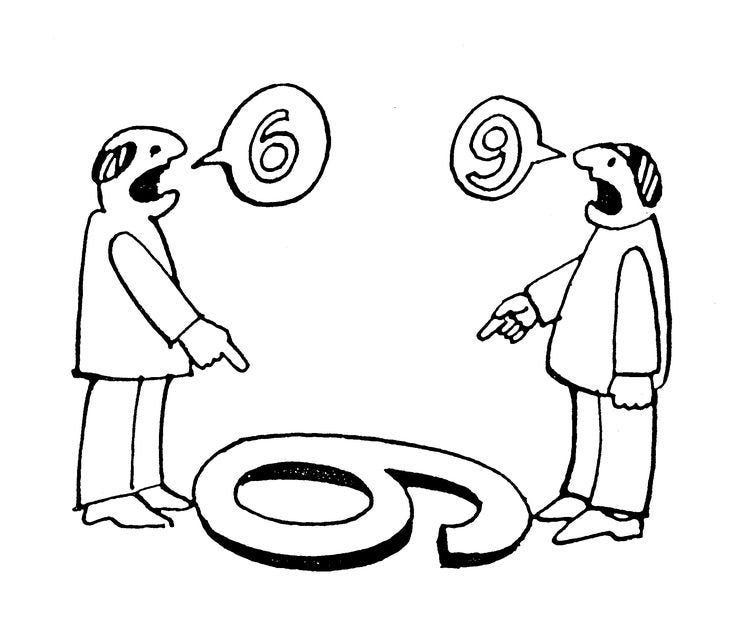
the other person feels heard

Garrison Wynn


Competent communication is effective and appropriate for a given situation, in which the communicators evaluate and reassess their own communication process (O’Hair, 2018). Mrs. Charisse is a coworker/friend who is an amazing communicator. Mrs. Charisse has behavior flexibility; she is able to figure out how to respond in an appropriate behavior depending on the situation.  Some behaviors that Mrs. Charisse portrays when communicating are being a good listener, understanding, flexible, easy to get along with, and she will not argue with you just to prove she is right. When I think of Mrs. Charisse I think of her warm and caring spirit. I believe she has a gift of helping and connecting with others and that is why she is able to effectively communicate. She truly care and wants to see people succeed.  

I am so happy to have her in my life as she is able to help me with my own communications skills. When I become overwhelmed or when I feel I am not being heard sometimes I will shut down and stop communicating. Mrs. Charisse will always remind me that I cannot get my point across if I just stop talking. She says if I need to take a break then that is fine, but she reminds me I have a lot to say and it needs to be heard.  The more conversations we have help my communication skills. I am naturally a good listener because I never want people to feel they are not being heard. I also generally know how people are feeling. Some behaviors that I would like to take away from Mrs. Charisse are knowing what to say in the right moment. I am excited to learn more about ways to communicate.


References
O'Hair, D., Wiemann, M., Mullin, D. I., & Teven, J. (2018). Real communication: An introduction (4th. ed). New York: Bedford/St. Martin's.